


1st Round table:
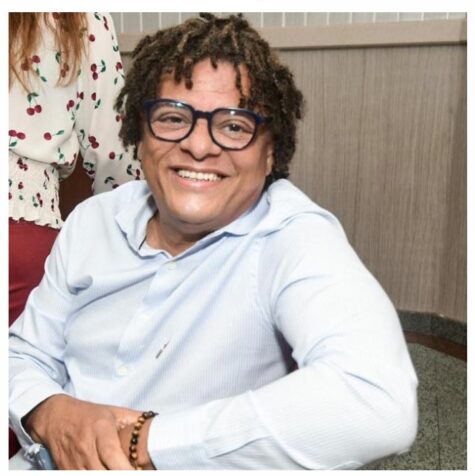 Augusto Sérgio dos Santos de São Bernardo
Doctor in Knowledge Diffusion Faced/UFBA in African Philosophy - Pedagogical University - Maputo - Mozambique - Master in Public Law from the University of Brasília/UNB (2007), Bachelor of Law - Catholic University of Salvador/UCSal (1990), Degree in Philosophy - Catholic University of Salvador/UCSal (1997), Specialized in Human Rights from the State University of Feira de Santana/UEFS (2000), Lato Sensu Postgraduate in Consumer Law from the Brasília Law School-IDP. Adjunct Professor at the State University of Bahia - UNEB - Department of Human Sciences Campus I, teaches the subjects: Philosophy of Law, Legal Hermeneutics and Consumer Law, Develops studies in the areas of Latin American, African and Brazilian philosophy. Former Diversity and Inclusion Coordinator at OAB-Bahia, Coordinator of the Rights and Africanities Research Group - CNPq - Cepaia - Uneb, currently holds the position of Chief Advisor to the Rectory of UNEB.
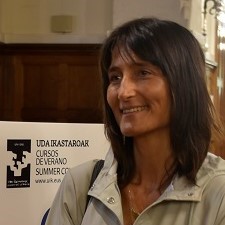 Gema Varona Martínez
is director of the Basque Institute of Criminology/Kriminologiaren Euskal Institutua (Donostia/San Sebastián, University of the Basque Country), where she coordinates the Laboratory of Theory and Practice of Restorative Justice (https://www.ehu.eus/es/web/ivac/sarrera), which directs the Technical Secretariat of the Basque Forum for Restorative Justice promoted by the Basque Government. PhD in Law, Diploma in Criminology and Master in Legal Sociology, she teaches Criminal Policy and Victimology at the Faculty of Law (UPV/EHU), co-directs the postgraduate course "Working with victims" (UPV/EHU) and is co-editor of the Journal of Victimology/Journal of Victimology. Principal researcher in various projects (including, in addition to those on interpersonal and political violence, currently one for the Ministry of Science on Restorative Justice in Damages against ecosystems and animals), she is chair of the working group on Environmental Restorative Justice of the European Forum for Restorative Justice, and author of monographs, chapters and articles in specialised journals. Gema has been elected President of the World Society of Victimology at its 18th Symposium in India.
Her most recent publications can be found at: https://orcid.org/0000-0002-2794-2239
https://dialnet.unirioja.es/servlet/autor?codigo=732899
https://cvn.fecyt.es/editor/cvnOnline/0000-0002-2794-2239
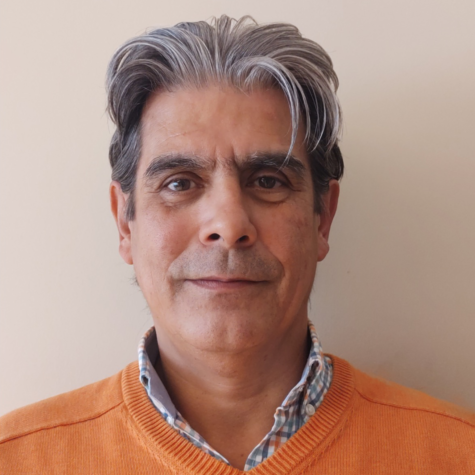 Mauricio García Peñafiel
is a psychoanalyst at the ‘École Belge de Psychanalyse’. He holds a doctorate in psychology from the ‘Université Catholique de Louvain’ and a master's degree in psychology from the ‘Pontificia Universidad Católica de Chile’. He was a professor in Santiago de Chile for 5 years, at the ‘Universidad Catolica de Chile’ and the ‘Universidad Alberto Hurtado’. Since 2005, he has been a professor at the ‘Université Catholique de Louvain’ in Belgium. He is the author of numerous articles on psychoanalysis, psychopathology, the relationship between psychoanalysis and culture, and contemporary forms of conflict. Since 2005 he has also taught in the ‘Interuniversity Certificate in Mediation’, organised by the ‘University of Namur’ and the ‘Catholic University of Louvain’. For a number of years now, he has also been academic head of the first year of this certificate.
2nd Round table:
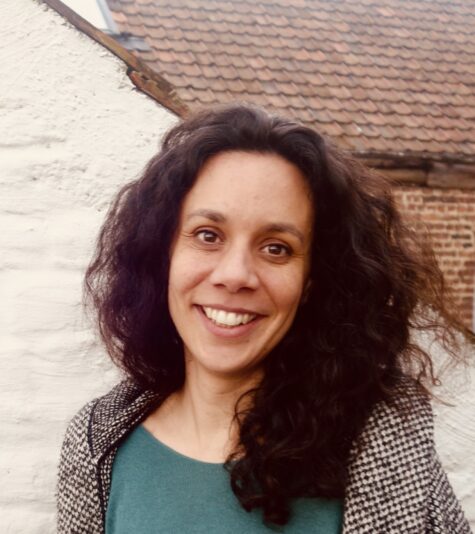 Salomé Van Billoen
Trained as a criminologist, she worked in Africa for 10 years, mainly in the Democratic Republic of Congo and Rwanda. It was in Rwanda that she accompanied village communities as they experimented with a restorative justice process in the area of domestic and sexual violence. Inspired by the results of this justice experiment and convinced by its universal scope, she documented it in the film ‘Les cornes de la vache’, which she initiated and with which she has been filming since 2019 (trailer: https://vimeo.com/858969207). She was then deputy director of ‘Médiante’, a Restorative Justice Centre for the whole of French-speaking Belgium. Today, she is a member of the group ‘Retissons du lien - Penser ensemble pour agir en commun’, which brings together families affected by the involvement of one of their members in jihadist ideology and bereaved persons or survivors of the Paris and Brussels attacks, alongside front-line workers confronted with the phenomenon of violent radicalisation. As part of the trial for the Brussels attacks, she coordinated the setting up and facilitation of restorative justice circles open to anyone affected by terrorism. She provides training in restorative justice and is also the author of the book ‘Les Juridictions Gacaca au Rwanda. Une analyse de la complexité des représentations’.
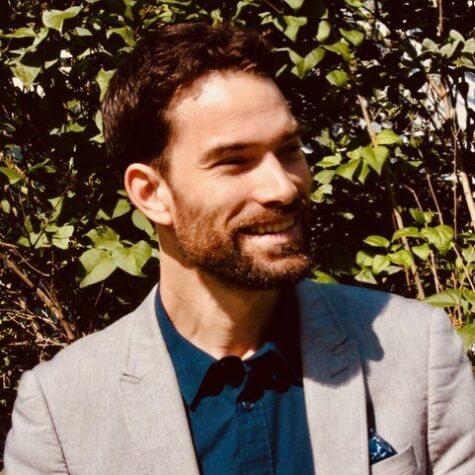 William Henriques
A lawyer, also has postgraduate degrees in management and sustainable development from HEC Montréal, and in dispute prevention and resolution from the Université de Sherbrooke. Very involved in environmental and social organisations, notably as a counsellor for suicidal people, he then devoted part of his career to the Montreal Legal Aid as a lawyer-advocate specialising in mental health. Rich in this human experience, he nevertheless deplores the systemic difficulties of the legal system in offering effective out-of-court settlement opportunities and a genuine chance for the parties to understand each other. His interest in exploring other forms of justice and social dialogue has led him to become a family mediator, to facilitate restorative justice processes, to practise within various government departments as a mediator, coach and trainer, and to teach the development of mediation skills at the University of Sherbrooke. He is also co-president of the Centre de Service de Justice Réparatrice.
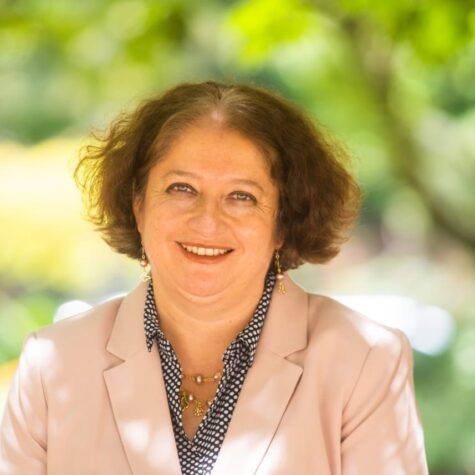 Gloria María Gallego
PhD in Law from the University of Zaragoza (Spain), she is currently professor of the Theories of Law at the EAFIT University (Medellín- Colombia), director of the Justice & Conflict Research Group and director of the Chair of Peace, Memory and Reconciliation at the same University. Author of fifty scientific works published in Colombia, Spain, Uruguay and Brazil, her topics of reflection are the theory of justice, the foundations and international protection of human rights, the law of war, the peaceful and creative regulation of conflicts, the problem of war and the ways of peace, the dilemmas of transitional justice, the construction of peace in everyday life, the duty of memory, and the material and symbolic reparation to the victims of the armed conflict. Her latest books deal with the practice of kidnapping in the Colombian war, its inhumanity and serious impact on individuals, families, coexistence in society and the deterioration of the economy and culture: Después vino el silencio. Memorias del secuestro en Antioquia, Bogotá, Siglo del Hombre Editores-Universidad EAFIT, 2019; Fue como un naufragio. Análisis y testimonios del secuestro en Colombia, Bogotá, Siglo Editorial-Universidad EAFIT, 2023.
3rd Round table:
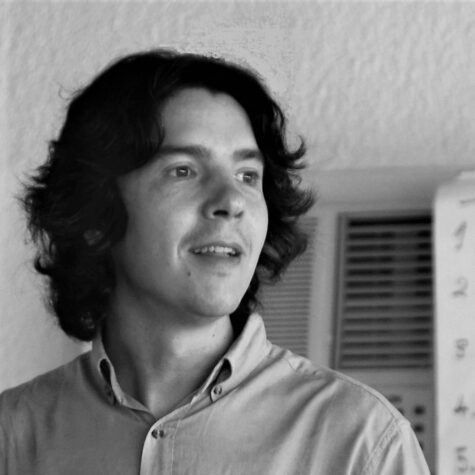 Jérôme Grimaud
Is a humanitarian worker and an accredited mediator with twenty years of experience, mostly in conflict contexts. He devoted my first missions to protective accompaniment in Central America and to frontline negotiations in the Middle East before becoming a Red Cross Delegate. He gradually specialized in the field of protection, conflict sensitivity, as well as humanitarian negotiation, mediation and dialogue facilitation, both as a practitioner and a trainer. His humanitarian negotiation and mediation experiences range from negotiating access of medical agencies and civilians at check points in the Palestine Occupied Territories to facilitating humanitarian mediation processes in the Central African Republic. He developed and piloted third party neutral humanitarian negotiation and mediation initiatives aiming at improving protection of civilians and humanitarian access for various NGOs, the UN Office for the Coordination of Humanitarian Affair and the Red Cross.
Jérôme led the Norwegian Refugee Council humanitarian negotiations and mediation programme for three years. He was one facilitator of the Centre of Competences on Humanitarian Negotiations and worked with MSF as roving negotiation advisor. He is currently Senior Protection Advisor for the NRC NorCap/OCHA Stand by Protection Capacity Project (ProCap). Specifically working on consolidating, developping and implementing proactive protection approaches aiming at preventing and/or mitigating episodes of violence. He facilitates courses, training and workshop for various organisations and Universities of the NOHA Network on Humanitarian Action, as well as at the Graduate Institute for International and Development Studies and Durham University. When not on mission, Jérôme manages of a sustainable development project on a organic farm in the West of France.
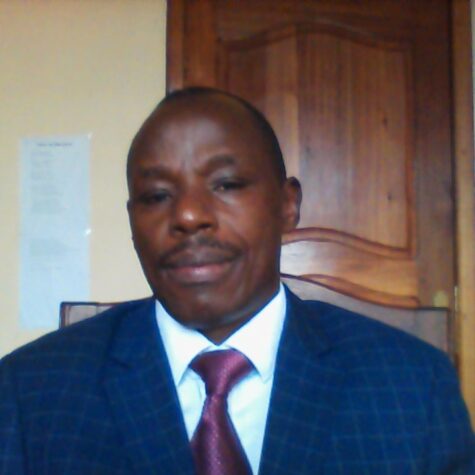 Masengesgho Kamuzinzi
He began his career as a teacher-researcher at the National University of Rwanda in 1998. He obtained his doctorate in education from the Université Catholique de Louvain in 2007, where he worked on how strategic planning models developed in the West are contextualised in Africa. He is currently a permanent professor of public policy (mainly social policy) and organisational theory (mainly social organisations) and research methodology in the Faculty of Social Sciences, Governance and Society at the University of Rwanda. In addition to his academic activities, Professor Masengesho Kamuzinzi is also involved in civil society as an active member of the Lifie Wounds Healing Association (LIWOHA), a national non-governmental organisation with extensive field experience and expertise in training local NGOs in conflict mediation using the Community Psychosocial Approach (CPA) and Restorative Justice as a means of empowering local communities to resolve conflicts that arise from living together. It is this organisation that has developed, tested and disseminated a new method of community intervention in the Greater Region: the "We Heal Together Model". He is currently the director of this organisation.
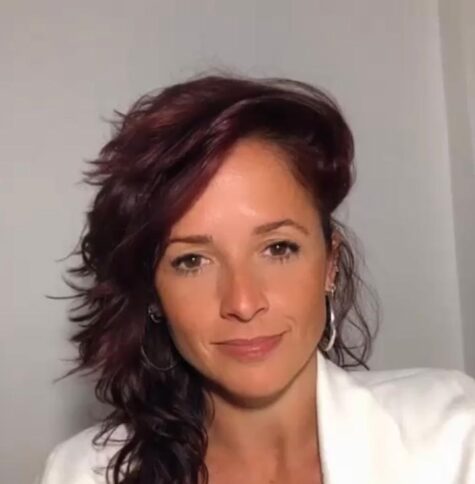 Silvia Vieira
Silvia Vieira is a lawyer and graduate of the Federal University of Rio de Janeiro (UFRJ). She is a consultant in human rights, restorative justice, conflict mediation, peace education and peace culture, with 24 years' experience in these fields, as well as project coordination, research and training. Silvia Vieira holds a Master's degree in Conflict Mediation from the University of Buenos Aires and the Kurt Bosh Institute, a specialization in Public Law from FEMPERJ, and an international diploma in indigenous legal systems, and decolonization from the University of Brasilia, the Inter-American Institute of Human Rights and the International Institute of Law and Society, and a specialization in the thought and method of Paulo Freire from Fiocruz and the Association of Judges for Democracy. She is the founder of Humana Arte - Diálogo e Convivência.
This content has been updated on 4 September 2024 at 12h13.